How to Balance a Full-Time Job With Caregiving
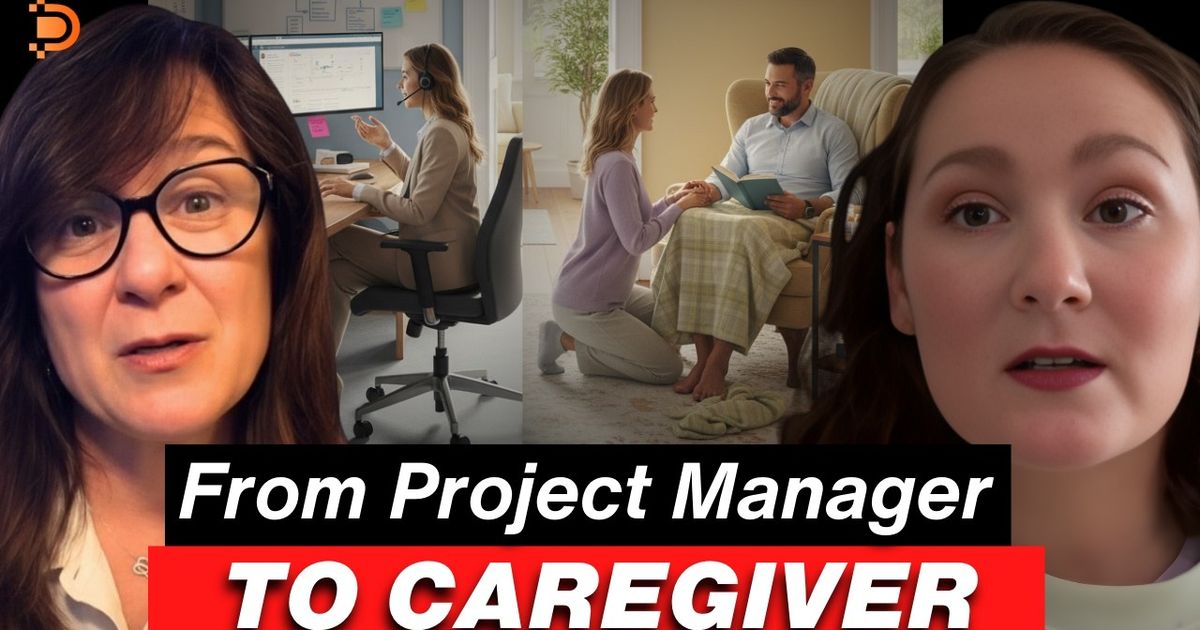
You balance them by treating caregiving like a project: tell the right people at work early, find out what leave and benefits you have before you need them, and get the legal documents signed while the person you care for can still sign. Anna Myers has done all of that while working full-time and caring for her husband, James, through terminal brain cancer.
She would be the first to tell you it is not a life she recommends. But how she has handled it holds lessons for any caregiver with a job, and any employer with one on the team.
On this episode of the Digital Legacy Podcast, I spoke with Anna, a project manager in software product development for a clinical trial company. I should say up front what I said on the episode: Anna is my daughter. I have been guiding her as a thanatologist and watching her as a mother, and those are not always the same role.
What happens when caregiving arrives all at once?
James was first diagnosed with a rare brain cancer at 22, twelve years ago. For years his scans were clear, and he and Anna, both skiers, lived an active life. In February 2025 they got engaged on a ski trip. Two weeks later, James said something did not feel right. The scan showed the tumor was back. (They call it Marvin.)
What followed came fast. A clinical trial that was not aggressive enough. A third brain surgery in June. A scan weeks later showing the tumor had grown back to its original size. Then radiation, and five days in, at breakfast outside with Anna's father, James stood up and fell on top of her. He had suffered a stroke. He lost mobility on his whole left side and now uses a wheelchair.
At the same time, Anna's company was going through a merger. “My personal life and professional life were equally chaotic,” she said. She was also planning a September wedding, and they had just brought home an eight-week-old puppy. Suddenly she was helping James shower and dress. “It's just a complete, full-on 180 change of our relationship and my life,” she said.
“Life happens very quickly,” she said. “You could be fine one day and the next day your whole life just changes.”
How do you keep working when caregiving happens during the workday?
Anna's job is fully remote, which she counts as a gift. Once, she was facilitating a big hour-long presentation from the bedroom, which was her office at the time, while James was sick in the bathroom for just as long. Whenever someone else was talking, she turned off her camera, ran to check on him, and ran back.
“I'm a project manager, so I know how to juggle many things, many escalations, all at one time, and make it seem like there's no problem,” she said. “And you know what? No one knew at work.”
Things are calmer now. Her manager knows what she is going through, and she is open about it. “When I'm in work, I'm in work,” she said, “and when I have to take a second to step out of work, I can.”
She was quick to add a caveat: “We don't recommend living this life.” Absorbing that much is a skill, not a plan. If you recognize yourself in “I've got it,” read When “I've Got It” Becomes Too Much.
What should you ask HR before you need leave?
Before the merger, Anna went to her HR contact for what she called a heart-to-heart. Her question was simple: when the time comes, what do I need to do? They laid it all out together. For James's surgery she used paid time off, under a flexible PTO policy.
That is the conversation I would urge every working caregiver to have early. In the United States, the Family and Medical Leave Act may give you up to 12 weeks of unpaid, job-protected leave to care for a family member with a serious health condition, but not everyone qualifies, and some states add paid leave. Ask HR what applies to you.
Benefits can surprise you, too. After the merger, Anna found a cancer insurance policy in her new company's 2026 open enrollment, something her previous employer did not offer. The benefit you need may already be there.
Anna knows she is fortunate: a stable remote job at a company she calls “very work-life balanced, very family centered,” and in-laws ten minutes away. Many caregivers have none of that, which is why HR must start talking about death.
Why is it so hard to get the legal documents done, even after a diagnosis?
When James was first diagnosed, he had no will, no power of attorney and no medical advance directive. Even after the cancer came back, it was not until the stroke that he was ready to start putting documents in place.
Anna does not put that on him alone. “I think that part of it is me too,” she said. “I hate it. It's like paperwork.”
One of my brothers has told me he will make a plan when he gets the diagnosis. But a diagnosis does not create time or headspace. That July, Anna was dealing with a stroke, a wedding and a new puppy all at once. Getting documents in order, she said, was “literally the last thing I had the mental space to think about.”
My worry, as a thanatologist, was capacity. With a brain tumor, a seizure could leave James without the legal mental capacity to sign a will or power of attorney.
Anna says it was never a matter of putting her foot down. “It's a together thing,” she said. “Not only does it protect him, it protects me.” She wanted James to have a voice while he could still decide, rather than leave it to others when emotions run high. In the end, the anxiety of not doing it outweighed everything else.
Even then it took months. The will came first, and the power of attorney a few months after that. With James in a wheelchair, every appointment is “a we thing.”
Some calls fall to one person. After James's falls, they sold the second car, which James and his parents did not fully support. Anna calls it the “best decision ever.” “We are partners,” she said, “but at some times you need to be the one that just goes forward.”
How do you talk about quality of life versus more treatment?
James's radiation was scheduled for ten days. After the stroke, they stopped. “His quality of life is more important than quantity of life,” Anna said. They are not at the point of bigger decisions yet, but they keep the conversation open.
That is what I encourage everyone to do, diagnosis or not. My husband and I have what-if conversations in the car: if this happened, what would you want? Anna and James have also started on his digital life. He wants everything deleted.
Where do you start if you haven't done any of this?
Anna's advice, especially for anyone who thinks they are too young: “You don't have to start big, start small.” The first thing she suggests is a little blank notebook. Start by writing down your passwords. (For a project manager's approach to the whole plan, see End-of-Life Planning Needs Project Managers Too.)
Then build up to the will. “Have something,” she said, “because the worst thing is not having anything, and then your wishes will not get honored at all.”
And if you will not do it for yourself, do it for someone else. “Do it for someone,” she said. “It's not for you. It's for your family.”
Anna gets frustrated when James tells her he feels sorry for her. “I choose this life every day,” she said. “I choose him every day.” Her closing words are the ones I would leave with anyone who is putting this off: “One hour can change everything.”
Frequently asked questions
Can I take FMLA leave to care for a spouse with cancer?
Often, yes, if you and your employer are covered. The Family and Medical Leave Act lets eligible employees take up to 12 weeks of unpaid, job-protected leave to care for a spouse with a serious health condition. Eligibility rules apply, so check with HR early, as Anna did.
When should someone with a terminal diagnosis sign a will and power of attorney?
As soon as possible. A medical event such as a seizure or stroke can affect a person's legal capacity to sign, and the process itself can take months. Anna and James's will and power of attorney took several. An estate attorney can tell you what your state requires.
Should I tell my employer I'm a caregiver?
That is a personal choice, but Anna found it helped. She talked frankly with HR about what she would need when the time came, and her manager now knows what she is going through, so she can step away and come right back.
Listen and take the next step
Watch my full conversation with Anna, Caregiving is a Project: Balancing a High-Stakes Career with Terminal Caregiving, on the Digital Legacy Podcast.
If caregiving has shown you how much is still undone, start here to see what your family would need, and in what order.
Live fully, die ready.
This article is educational and does not provide legal, medical or employment advice. Leave and benefit rules vary by employer and by state.