What Happens to Your Family When the Person Who Knows Everything Is Dead?
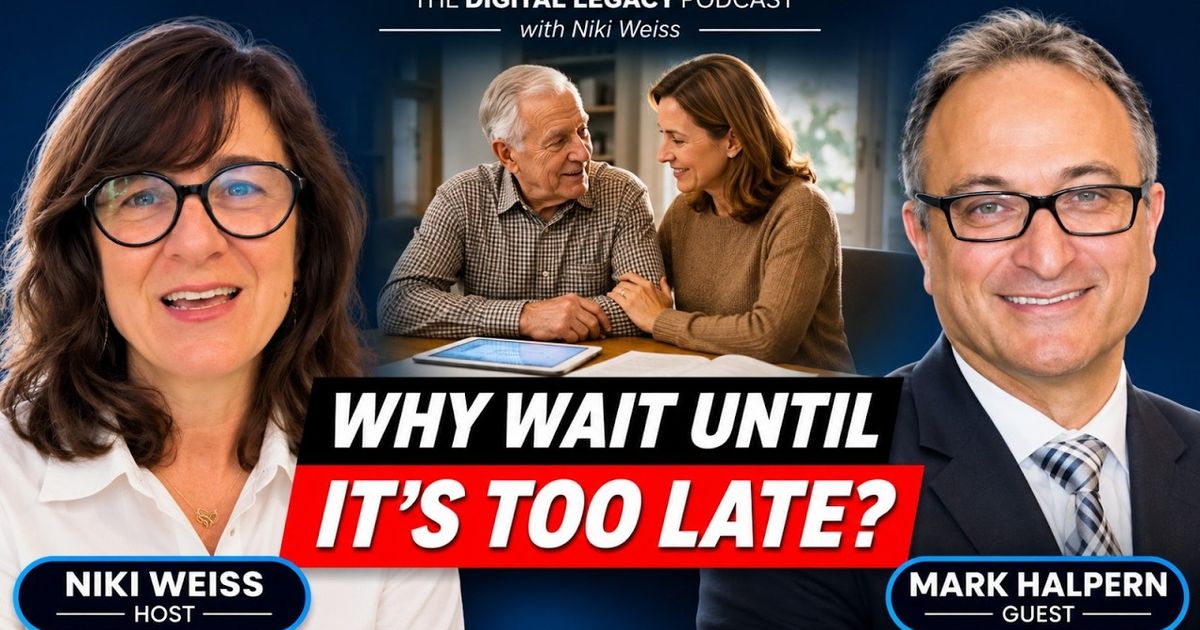
A conversation with wealth manager Mark Halpern about the planning gaps that money alone cannot solve
When wealth manager Mark Halpern was 11 years old, his father died of a heart attack at age 50. His mother was left to raise four boys with little savings, no life insurance and no will. Mark remembers the practical consequences as clearly as the loss itself. His mother was forced to return to work, and as each son learned to drive, he took a turn taking her to the subway and collecting her afterward. That experience shaped the work Mark has done for 36 years: helping families protect not only the wealth they accumulate, but also the people who will depend on their decisions when life changes without warning.
The conversation: why even successful families are often unprepared
On an episode of Death and Dying in the Digital Age, Mark and I talked about the gap between being financially successful and being genuinely prepared. Mark, a Certified Financial Planner and Trust & Estate Practitioner who founded WEALTHinsurance.com, works with business owners, executives and affluent families. Yet he estimates that 80% to 85% of the people he encounters still have basic estate-planning gaps. That figure reflects his own professional experience, not a population-wide study, but the problem is easy to recognize. Having investments, advisors and insurance does not automatically mean someone else can locate the documents, understand the accounts or step in when needed.
Mark asks couples a question that changes the tone of the conversation: if both of you died while traveling, would a third person know where your bank accounts, life insurance policies, property documents, safe deposit box keys and digital information are? He says roughly nine out of ten couples he asks admit that they have not adequately prepared for that possibility. The question is not designed to scare anyone. It reveals an overlooked part of family planning: the people left behind need a way to find the information and authority to act on it.
This conversation also felt personal. Mark and I both lost our fathers when we were 11 years old. Those losses gave us an early understanding of what families face when grief arrives alongside financial and administrative uncertainty. It is one reason we both believe that readiness should be discussed while people are healthy and able to make decisions together, not only after an emergency.
The lessons: a financial plan is only as useful as the family's ability to use it
One of Mark's stories involves an older man who had added him as a second authorized person on a safe deposit box. Years after the man died, a bank letter arrived because the box fees had gone unpaid. The children were still in conflict over the estate, and no one had a key. Mark paid to have the box opened with a witness present. It was empty. The surprise ending makes the story memorable, but the real lesson is about uncertainty. Families should not have to investigate every account and storage location while also navigating loss and disagreements.
In another case, Mark described a man who cared for his wife after her stroke and then suffered a stroke himself. Their adult daughters flew home from overseas to help, only to discover that being daughters did not give them automatic authority to handle their parents' finances. Without appropriate powers of attorney, the family became entangled in a costly legal process involving a public trustee. The specifics depend on local law, but the principle travels well: planning for incapacity matters just as much as planning for death. A will does not provide the same protection as valid arrangements for decisions during someone's lifetime.
Mark also sees how easily people postpone this work. Some believe they have plenty of time, others assume a serious illness or sudden death will happen to someone else, and many simply do not know where to begin. Even when people have financial and legal professionals, no one may be asking the questions that connect the pieces. That is an opportunity for wealth managers and financial planners to help clients move beyond accumulating assets toward making their plans usable for the people they love.
An estate directory is one practical bridge. It can identify where accounts, policies and documents are held, who the relevant professionals are, and where trusted people should turn first. It should not expose passwords or sensitive details in an unsecured file, and it does not replace legal documents. But it can reduce the number of unanswered questions a family must solve under pressure. At ENDevo, we see this as part of a broader readiness picture that includes legal, financial, physical and digital matters. Preparation is not a single document. It is a working plan that someone else can follow.
Five things you can do today to plan better for tomorrow
- Start with the question nobody wants to ask. Sit down with your spouse, partner or another trusted person and ask what would happen if one or both of you were suddenly unavailable. Mark suggests making an evening of it, sharing a meal and interviewing each other. The point is not to finish everything in one sitting. It is to discover what only one person knows and what would be difficult for someone else to find.
- Create a simple estate directory. Record the names of financial institutions, insurance carriers, advisors, attorneys and other essential contacts, along with the locations of important records. Include property information and an inventory of important digital services. Store the directory securely and make sure the appropriate person knows how to access it when legally authorized. Keep passwords in a secure password manager rather than an unprotected document.
- Review the legal authority someone would need. Ask a qualified professional whether your will, financial power of attorney, healthcare decision-making documents and any relevant trusts reflect your current wishes and local legal requirements. The two-stroke story is a reminder that loved ones may need authority to help while you are still alive, not only after death.
- Check beneficiaries and ownership details. Review life insurance, retirement accounts and other assets that pass through beneficiary designations or particular ownership arrangements. Confirm that the information still makes sense after marriages, divorces, births, deaths and other major life changes. This is an area where a financial advisor and estate-planning attorney can help identify inconsistencies.
- Set a date to finish the next step. Choose one unresolved task, assign a responsible person and put a date on the calendar. You might start by locating a policy, contacting an attorney or explaining your digital account-access plan to someone you trust. Then schedule an annual review. Readiness is built through follow-through, not by waiting for the perfect moment to tackle everything at once.
Near the end of our conversation, Mark shared his mother's running joke that her tombstone would read, "I'm gonna." It is a painfully familiar expression of all the things we intend to do someday. Mark's alternative is worth remembering: "It's not one day. It's day one."
If something happened tomorrow, the people who love you would still grieve. No amount of planning can remove that. What planning can do is spare them some avoidable confusion and give them a place to start. That is a meaningful gift, whatever the size of your estate.
Learn more about Mark at WEALTHinsurance.com.
Listen to the full conversation with Mark Halpern on Death and Dying in the Digital Age. To find the gaps in your own plan, take ENDevo's free Peace of Mind Assessment.
Keep reading
- Why Choosing the Right Executor Could Save Your Family Years of Stress
- Who Will Know What to Do When You Cannot
- What Happens to Your Passwords When You Die?
Frequently asked questions
What is an estate directory?
It is a record of where accounts, insurance policies and important documents are held, who the relevant professionals are, and where trusted people should turn first. It should not expose passwords in an unsecured file and it does not replace legal documents. Keep passwords in a secure password manager.
Why do you need a power of attorney as well as a will?
A will does not help while you are still alive. Mark described two adult daughters who could not manage their parents' finances after both parents had strokes, which led to a costly legal process. Requirements vary by location, so ask a qualified professional what applies to you.
What question does Mark ask couples about their estate?
If both of you died while traveling, would a third person know where your bank accounts, insurance policies, property documents, safe deposit box keys and digital information are? Mark says about nine out of ten couples he asks admit they are not prepared for that.
Niki Weiss is a digital thanatologist and the founder of ENDevo.
This article is educational and does not provide legal, medical, financial, or mental health advice. Laws and requirements vary by location. Consult qualified professionals about your situation.