Why Saying "I Want to Be Cremated" Isn't Enough in Pennsylvania
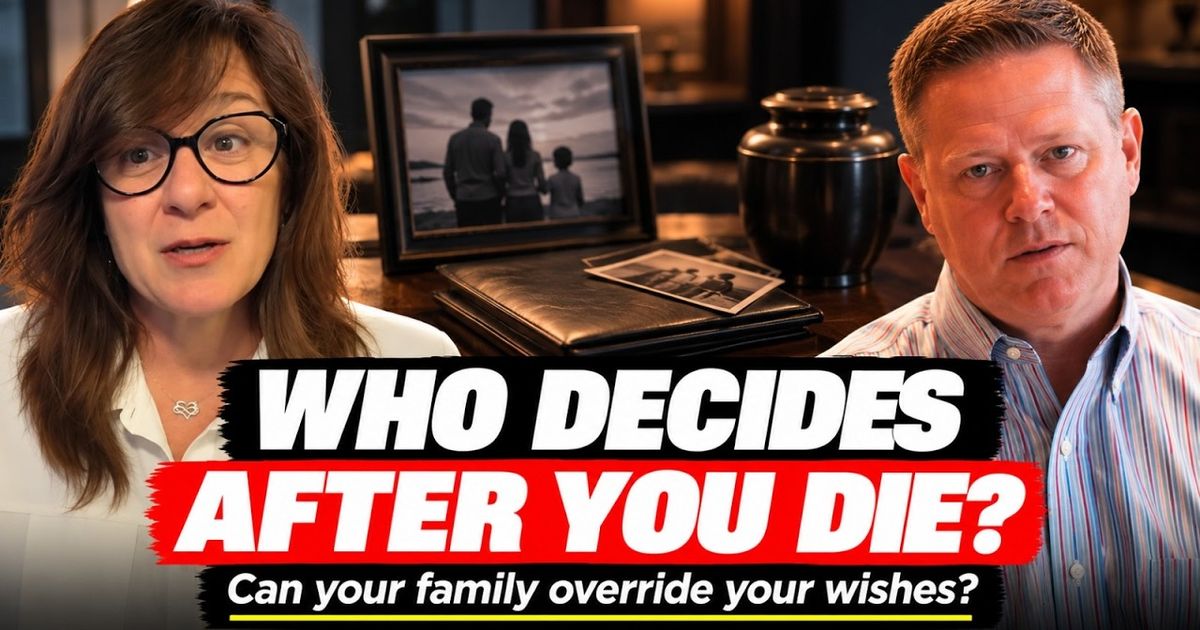
A conversation with Matt Grieco, funeral director, Naugle Funeral Home, Kennett Square
You told your kids you want to be cremated. In Pennsylvania, 2 of them can still bury you.
That’s not a loophole. It’s the law, and a funeral director explained it to my husband and me across a conference table on Father’s Day. We’d gone in to pre-plan Chuck’s arrangements. We came out with a document neither of us had heard of.
A will doesn’t decide what happens to your body
Most people stop at “I told them.” Some go further and put cremation in the will. Matt Grieco, a funeral director for 25 years at Naugle Funeral Home in Kennett Square, says neither one is enough.
By Pennsylvania law, before he can cremate you, he needs your closest next of kin to agree. If your spouse is gone and you have 3 adult children, the majority rules. 2 want burial, you’re buried. Even with it written down. Even if the third child is holding the paper that says otherwise.
“It could be a mess,” Matt said. He’s seen it.
The fix is a 1-page document called a statement of contrary intent. You name the person who authorizes your cremation, contrary to what the law would otherwise require, and you sign it. It can be a child. It can be your neighbor. Matt says having cremation in your will “is also helpful, but not quite enough.” This document is what closes the gap, and he now uses it in almost every cremation pre-arrangement he does.
Why we were sitting there at all
My son called that afternoon and asked what we were doing. I told him his father and I had a hot date at the funeral home. He laughed and said, of course you are. He knows My Final Playbook is my passion project.
But the reason I wanted Chuck in that chair wasn’t the business. It was his son.
Chuck has a son from his first marriage. If Chuck dies before I do, that son and I are the 2 people left to decide. He’s busy, he has 2 little girls, and the 2 of us have never sat down and talked about any of it. I don’t want to be looking across a table at my stepson, both of us grieving, trying to agree on decisions his father could have made in 20 minutes.
So I said it out loud in that room: don’t put us in that situation. Have Chuck come in, get it documented, make it clear. Then my stepson and I can grieve instead of negotiate.
The ashes on the shelf
Matt opened the conversation with a number that stuck. There are families all across the country who had someone cremated and the person is still in a closet, years later. Nobody decided where the ashes go, so nobody did anything.
I didn’t have to imagine it. My mother was cremated 2 years ago. Right now her ashes are in storage while my sister moves. The plan is for her to be buried alongside my father at the veterans cemetery when his time comes, and that plan is sound. But my uncle’s ashes sat around so long they were misplaced more than once before anyone found them again.
Matt’s advice: put the destination in writing on the same document. Scattered, interred, in a niche, or in your son’s closet for perpetuity. “At least make one of those decisions.”
Chuck’s answer was a place to be scattered. He also wants to go out with the sled dogs. He ran a kennel for years, 16 or 18 dogs at one point, and he buried most of them in the backyard. His son grew up watching that. Matt’s point was that the family can still shape the moment, keepsake urn, a trip to the ocean, whatever helps them grieve. But the decision of where you go shouldn’t be theirs to invent.
Funerals are for the living
Here’s the part I didn’t expect from a funeral director. Matt cautioned us not to lock everything down.
Document the disposition. Document who authorizes it. Document where the ashes go. Then leave room. The people who survive you need to plan the event, pick the venue, choose the pictures, because the act of planning it is part of how they grieve. “Funerals are for the living as much as they are for the dead.”
That reframed the whole exercise for me. We weren’t there to take decisions away from our kids. We were there to take away the ones that would hurt.
3 things to do now
- Say it out loud. Cremation, burial, or green burial. Tell your spouse, your adult children, your siblings. Matt says if you’ve done that, you’ve done more than most people.
- Sign a statement of contrary intent. Name who authorizes your cremation. Ask your funeral home for the form. If it’s in your will only, it’s not enough in Pennsylvania, and your state may be similar.
- Write down where the ashes go. 1 line. Don’t make your family guess, and don’t let a parent sit in a closet for a decade.
If you died this year, who would sign for your cremation, and do they know it?
Listen to the full conversation with Matt Grieco on Death and Dying in the Digital Age. To find the gaps in your own plan, take ENDevo's free Peace of Mind Assessment.
Keep reading
- Behind the Scenes at a Modern Funeral Home: Revolutionizing End-of-Life Planning
- Green Burials: A Return to Natural Death Care Practices
- End-of-Life Planning Made Simple: Insights from a Funeral & Financial Expert
Frequently asked questions
Is writing "cremation" in your will enough in Pennsylvania?
Matt Grieco says it is helpful but not quite enough. Under Pennsylvania law, he needs your closest next of kin to agree before he can cremate you, and if you have several adult children the majority rules. Rules vary by state, so ask a local funeral director or attorney.
What is a statement of contrary intent?
It is a one-page document where you name the person who authorizes your cremation, instead of leaving it to the legal default. Matt uses it in almost every cremation pre-arrangement he does. Ask your funeral home for the form.
Should you decide where the ashes go?
Yes. Matt recommends putting the destination in writing on the same document: scattered, interred, in a niche, or kept by family. Then leave room for the people who survive you to plan the event, because planning it is part of how they grieve.
Niki Weiss is a digital thanatologist and the founder of ENDevo.
This article is educational and does not provide legal, medical, financial, or mental health advice. Laws and requirements vary by location. Consult qualified professionals about your situation.