In a Coma With No Will and No Power of Attorney
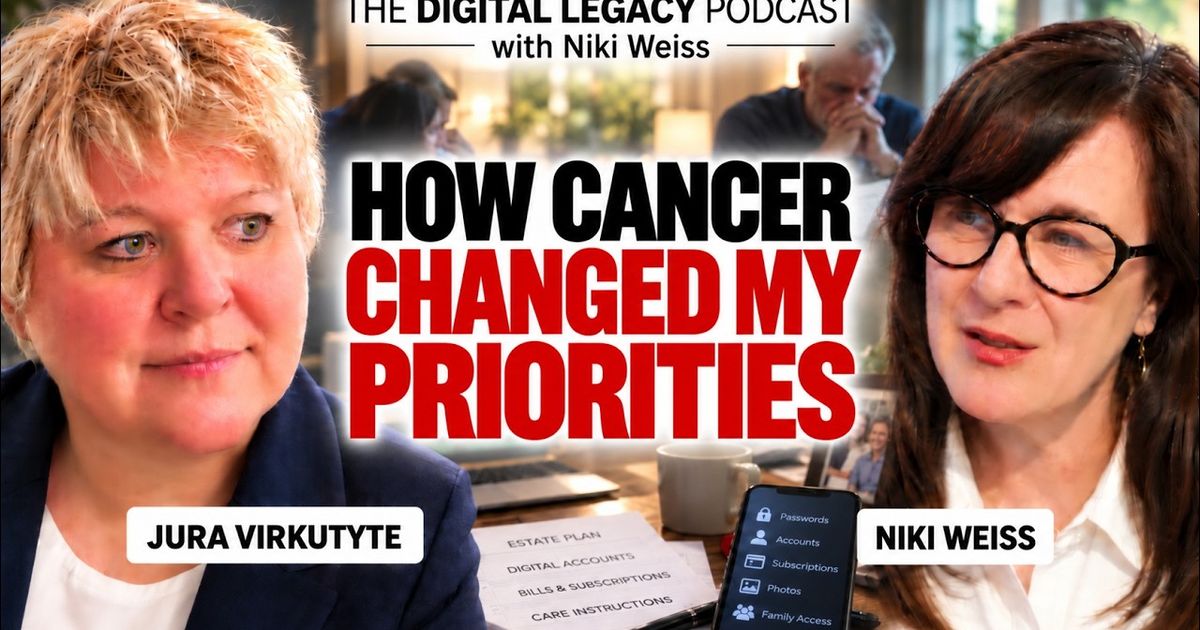
A conversation with Dr. Jura Virkutyte, environmental health scientist, software QA and product lead on the ENDevo team, and cancer survivor
Can my family get into my phone?
Jura Virkutyte asked that from a hospital bed in 2023, after she woke from a coma. She had no will, no power of attorney, and a wife and son waiting outside the ICU. What she learned there isn’t about death at all.
The gap isn’t death. It’s the months you’re still alive.
Most people think “a will” and stop. A will does nothing while you’re breathing. A coma, a stroke, a heart attack: these leave you alive and your family locked out. Out of your phone. Out of the bank. Out of the room where doctors ask who can decide for you.
Jura puts it plainly. Everyone knows to call 911. Nobody knows the next step. Who takes care of the dog? Who drives the kids? What happens to the bills when the only person who knows the passwords can’t speak?
That’s the position of this episode, and it comes from someone who lived it: incapacity, not death, is the gap most families never plan for.
How a scientist ended up unconscious with no plan
Jura is an environmental health scientist. Chemistry degree in Lithuania, engineering master’s in Sweden, PhD in Finland, professorships in Finland and Australia. In the US she modeled exposure risk for the EPA and the Air Force. For the last 10 years she’s been a QA and product lead for health and software companies, and she’s on the ENDevo team now.
Her symptoms started years before anyone named them. Night sweats she wrote off. A cough she blamed on weak lungs after Covid. Body aches and an exhaustion she called “everyday stress.” Her wife said, let’s go to the doctor. Jura said no, it’ll pass.
Then her lungs collapsed.
She describes it as trying to breathe in with nothing getting in. Her wife found oxygen bottles, the kind people use at altitude. They helped for a while. Then they didn’t. At the ER the testing started: collapsed lungs, sepsis, then a coma.
“Oh by the way, you have cancer”
She woke with the tubes out and an oncologist at the bedside. His words, as she remembers them: oh by the way, you have cancer.
It didn’t register. Not for weeks. She was breathing on her own, and breathing was the only thing that mattered. “Nothing matters as long as you can breathe,” she told me. “Then we can deal with it later.”
The mass was ovarian cancer the size of a grapefruit. She says doctors gave her a 1 percent chance. Surgeons stood over her bed with plans for her heart and her lungs, and day after day they signed off, one by one, because the next scan came back better than the last. She calls it a rolling-wave miracle. She’s still in treatment. Her lungs are clear.
And through all of it, no plan.
Why she couldn’t plan, even then
I asked her why. Her answer is the most useful thing in the episode.
2 streams ran in her head at once. One: I’m afraid to even talk about it. The other: I don’t have time, I have to survive the next 2 hours. Blood draws every 2 to 3 hours. Hands swollen and blue. “You have to survive that pain,” she said, “so you don’t think about other things.”
And underneath both: if I start planning, that means I’m dying.
That’s the catch-22. The moment you most need a plan is the moment you’re least able to make one. Her friends ran the logistics from outside the hospital, who’d take the son, who’d check on her mother. She was lucky to have them. Luck isn’t a plan.
I know that breath panic from the other side. I grew up with severe asthma, nights sitting up counting every breath. When air is the only thing you can think about, nobody is signing documents.
What a survivor noticed when she tested the process
Jura joined ENDevo as a QA lead and went through My Final Playbook twice: once as a tester, once as a patient.
What she noticed as a professional is what made it work as a patient. The questions come in small pieces. There’s no deadline unless you set one. Nothing threatens you. “When people start thinking, they start panicking,” she said. “When they panic, they shut down.” Small steps are how you get a scared person to keep going.
And she didn’t do it alone. Several questions sent her straight to her wife: what are we doing about this? Those conversations, she says, are what gave her peace. Not the documents. The fact that her family knows.
3 things to do now
- Name 1 person who can act for you while you’re alive. A health care agent and a financial agent. Tell them. This is the document a will can’t replace.
- Write down how your spouse gets into your phone. Not the password in a text. A place both of you know, that one of you can reach from a hospital waiting room.
- Ask the 911 question out loud. Who takes the kids? Who takes the dog? Who calls your mother overseas? If the answer is “my friends would figure it out,” that’s what Jura had. She’d tell you to do better.
Jura’s own advice, in her words: start it and finish it. And stop being afraid to talk about dying. “It’s part of life.”
If you were unconscious tomorrow, who could get into your phone today?
Listen to the full conversation with Dr. Jura Virkutyte on Death and Dying in the Digital Age. To find the gaps in your own plan, take ENDevo's free Peace of Mind Assessment.
Keep reading
- Who Will Know What to Do When You Cannot
- What Happens to Your Passwords When You Die?
- Estate Planning in the Digital Age: Why Waiting Is the Worst Strategy
Frequently asked questions
What happens if you are in a coma with no power of attorney?
Your family can be locked out of your phone, your bank accounts and the room where doctors ask who can decide for you. A will does nothing while you are alive. Rules differ by location, so ask a qualified professional what applies to you.
Why is it so hard to plan during a health crisis?
Jura describes fear of even talking about it, plus the need to survive the next few hours. Underneath both was the thought that planning meant she was dying. The moment you most need a plan is when you are least able to make one.
Who should you name to act for you while you are alive?
A health care agent and a financial agent, and tell them. Also write down, in a place your spouse can reach from a hospital waiting room, how they get into your phone. Do not rely on a password in a text.
Niki Weiss is a digital thanatologist and the founder of ENDevo.
This article is educational and does not provide legal, medical, financial, or mental health advice. Laws and requirements vary by location. Consult qualified professionals about your situation.